
Kathleen James-Chakraborty – Bauhaus & Beyond Symposium, Bauhaus-Universität Weimar.
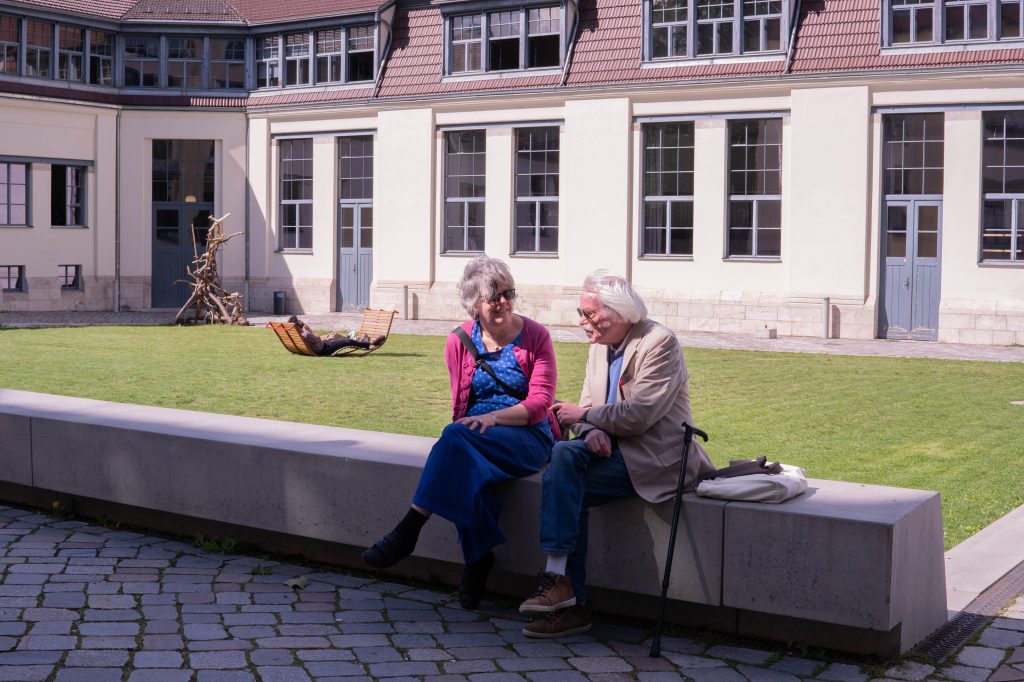
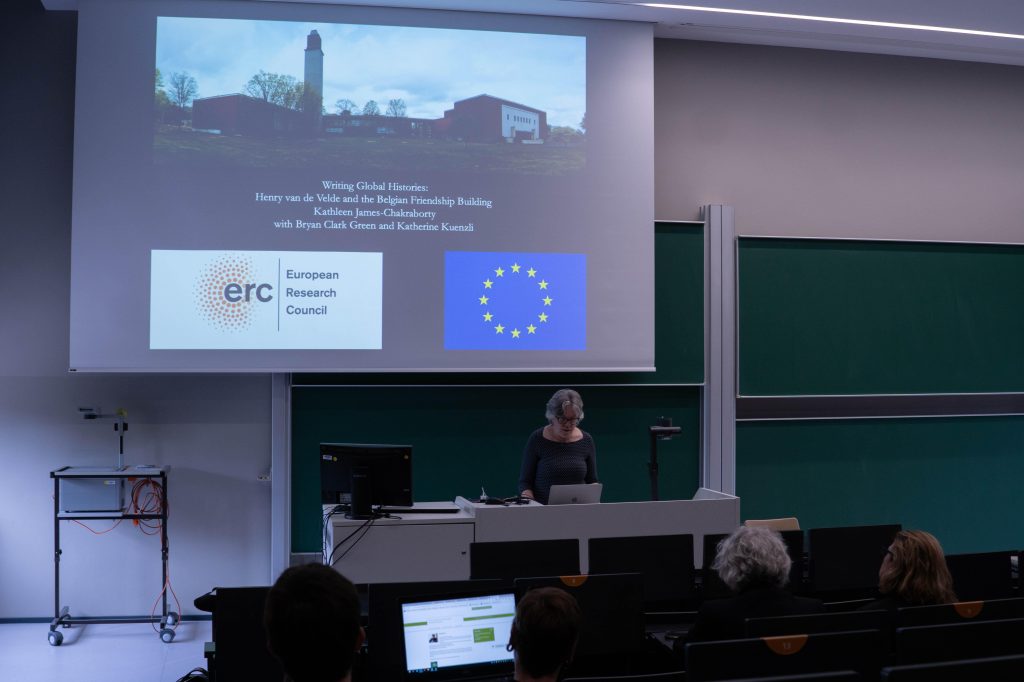
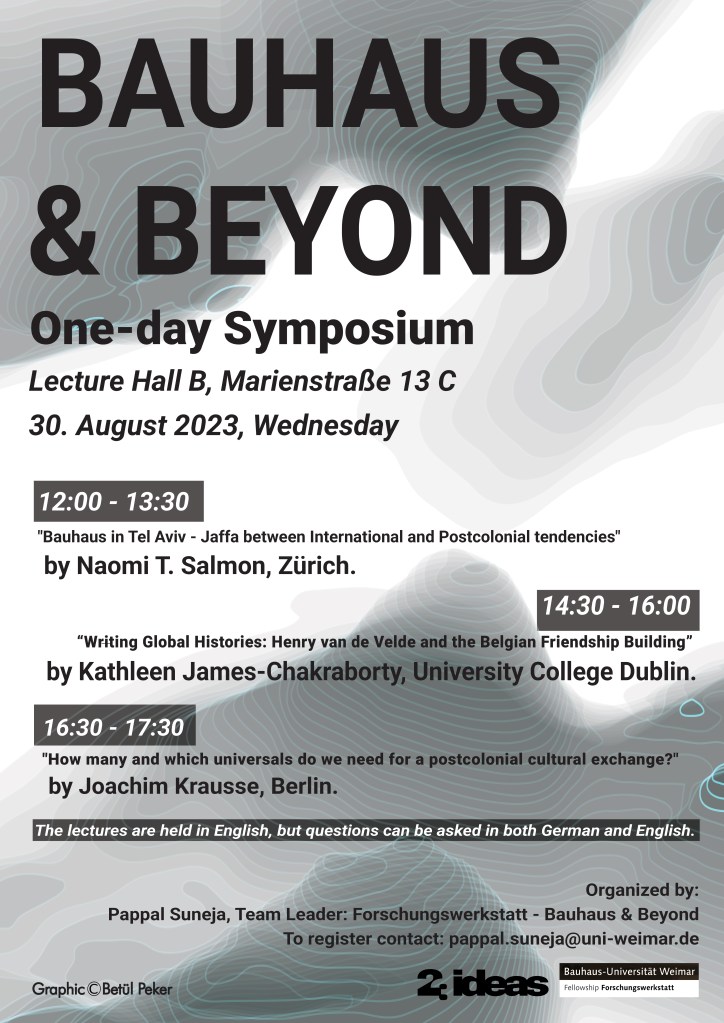
Henry van de Velde established the Grand Ducal School of Arts and Crafts in Weimar, Germany, that his successor, Walter Gropius, transformed into the Bauhaus. Speaking in a building designed by van de Velde and used by the Bauhaus, I offered an alternative to the usual accounts of the school’s eventually global reach by focusing on van de Velde and, more specifically, on his contributions to Belgium’s pavilion at the 1939 World of Tomorrow exhibition held in New York, which also included a display centered on the Congo, then a Belgian colony. Although everyone in Weimar who is interested in architecture and design is well aware of van de Velde, the story of what became the Belgian Friendship Building at Virginia Union University in Richmond, Virginia, is unfamiliar, as is what it says about van de Velde’s reception in the United States and about the relationship between modern architecture and racial politics there.
 Expanding Agency: Women, Race and the Global Dissemination of Modern Architecture
Leave a comment