Nokubekezela Mchunu – IV Congreso Internacional Cultura Y Cuidad, Granada, Spain
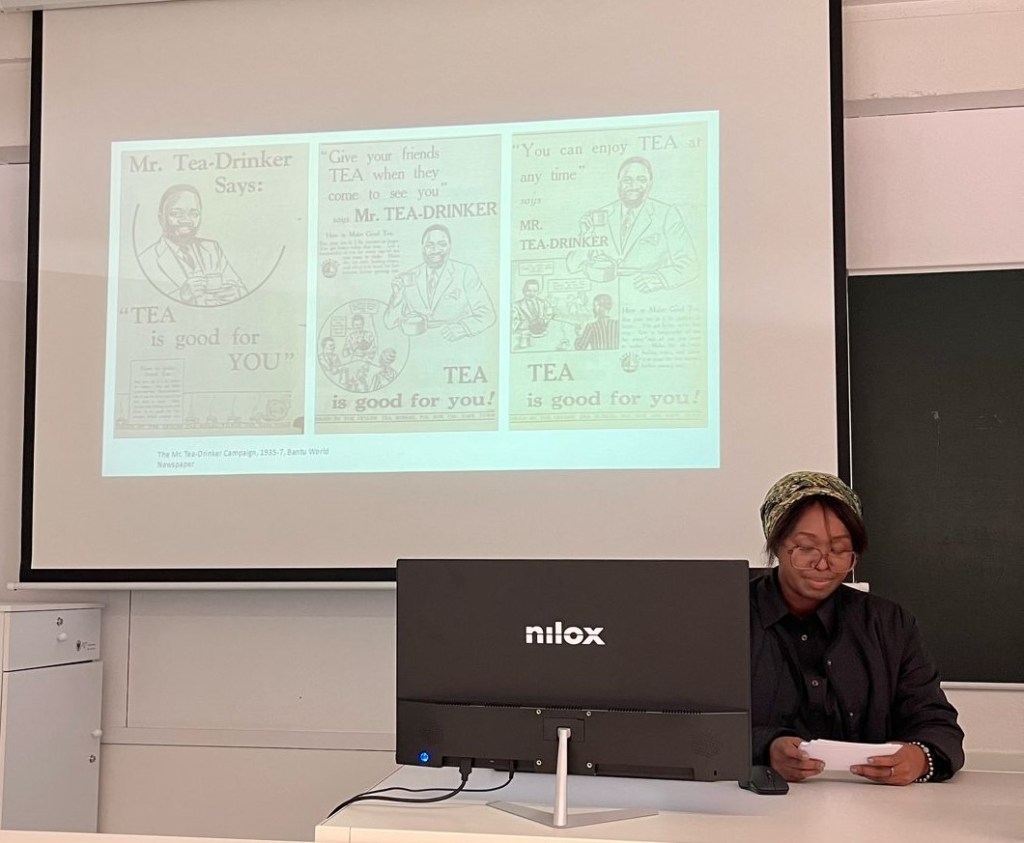
The introduction of tea to colonies by Britain transcended the beverage itself; it represented a profound cultural and societal influence. Its impact extended to architecture and modernised living, shaping domestic histories in colonies such as South Africa during and after the nineteenth century. To establish and sustain a monopoly over the tea trade, the empire implemented public policies and an extensive marketing strategy to endorse an “empire shopping movement” that merged consumer behaviour with nationalist sentiments, conflating the personal body with a national one. The printed press was instrumental in disseminating these ideologies, although resisted by targeted black consumers who opposed aspects of these identities that were intertwined with colonial, state-defined characterisations of blackness. Tea marketers responded to these reservations by appointing ambassadors who reflected idealised portrayals of black modernity in their adverts. This study aims to identify instances in which tea, a colonial import, infiltrated the domain of architecture in a modernising South Africa through portrayals of black occupation in advertisements.
 Expanding Agency: Women, Race and the Global Dissemination of Modern Architecture
Leave a comment