Alborz Dianat – Session: Media and Objects of the Home (Building Word Image interest group); Conference: EAHN 2024, Athens (19-23 June 2024)
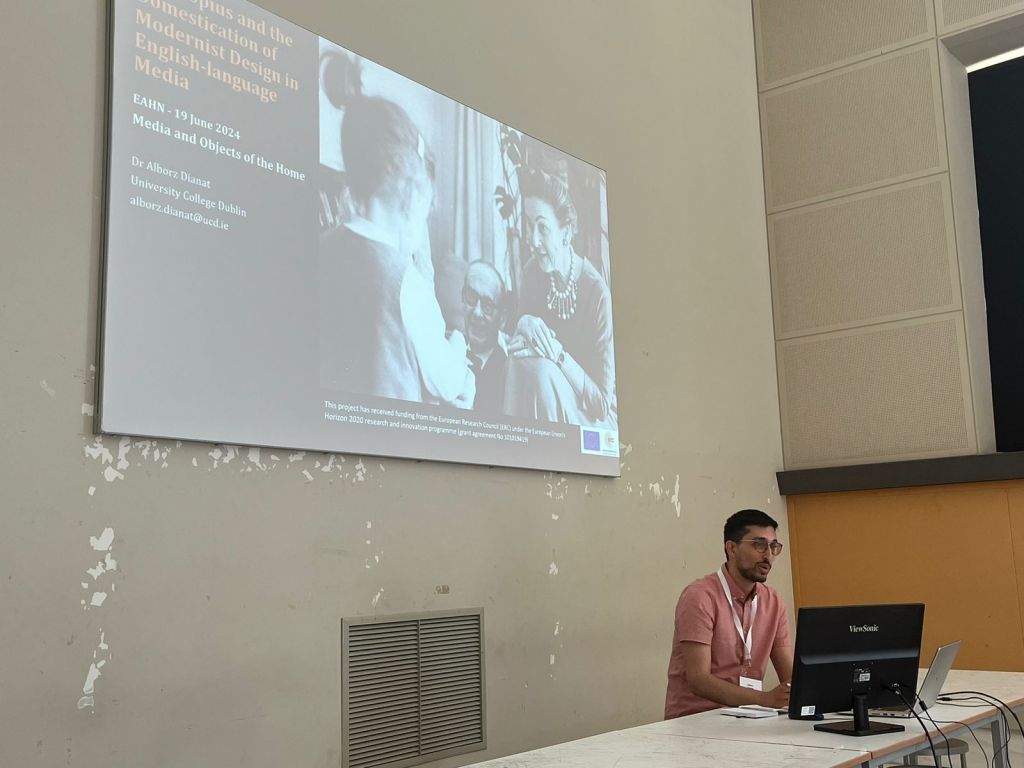
This paper considers the importance of authorship in relaying domestic design through media, as demonstrated by Ise Gropius’s navigation of English-language publications. After marrying Walter Gropius in 1923, Ise Gropius established herself as publicist for the Bauhaus. Her role developed further following immigration with her husband to Britain in 1934 and the United States in 1937. While her husband could speak little English, Ise was fluent.
Through interviews and articles, Ise Gropius reached a mass consumer audience while confronting the perceived severity of Modernist design in domestic settings. Media caricatured Walter Gropius as a severe exponent of mechanical domesticity, but Ise’s savvy propaganda countered this by foregrounding more desirable aspects. Her contributions in periodicals for predominantly female readers confronted the supposedly masculine appeal of Modernist design. Among her first contribution in the English-language, an article for New York’s House Beautiful in 1931 argued for standardised objects. Rather than ‘mechanizing the individual’, these would provide ‘new zest and greater richness to its free and untrammelled enjoyment’.
Ise Gropius was also responsible for publications authored under her husband’s name. Among her accomplishments was the book, The New Architecture and the Bauhaus (1935). While credited to Walter Gropius, archival evidence indicates he was scarcely involved even in the original German manuscript, with Ise Gropius leading its production. Ise’s decision to seek independent credit under other circumstances indicates awareness of the benefit of attaching a woman’s name to matters of domesticity.
Based on archival research and a survey of published contributions, this paper resurfaces Ise Gropius’s neglected role as a propagandist of the Bauhaus in the English-language, suggesting that the domestic desirability of Modernist design was deliberately directed under her name. This paper thereby sheds light on the importance of gender, attributed authorship, and individuality in communicating designs for the home.
 Expanding Agency: Women, Race and the Global Dissemination of Modern Architecture
Leave a comment